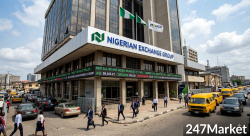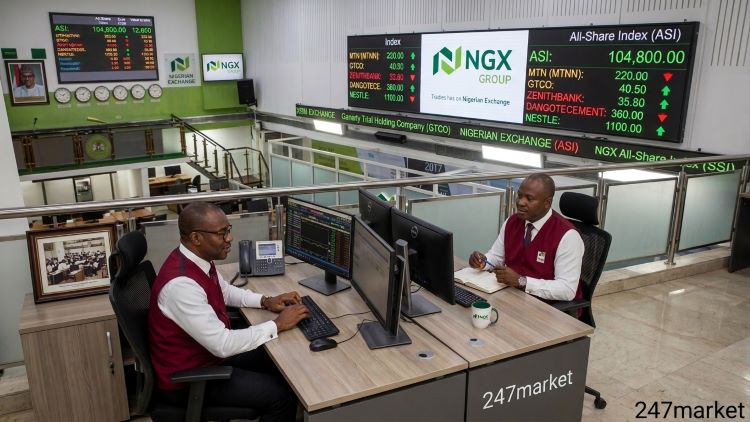
10 Stocks to Watch As Nigeria Returns to Frontier Market Category
Nigeria's return to the FTSE Russell Frontier Market Index takes effect on September 21, 2026 — reopening the door to funds locked out since 2023. From GTCO and Zenith Bank to Dangote Cement and Aradel Holdings, we break down the stocks best positioned to benefit and what the reclassification really means for market liquidity.
Here are 10 Stocks to Watch on the NGX
Nigeria is back on the global index map. Effective the market open of Monday, September 21, 2026, FTSE Russell will reclassify Nigeria from "Unclassified" back to "Frontier Market" status — reversing the September 2023 exclusion that followed years of FX queues and capital repatriation delays for foreign investors.
The confirmation came on August 27, 2026, after FTSE Russell briefly paused the process to review Nigeria's transition to T+1 settlement. Following engagement between NGX Group, the SEC, global custodians, and FTSE Russell's advisory committees, the index provider found no material settlement, operational, or funding issues tied to the new cycle — clearing the path for reinstatement.
For a market that has run largely on domestic liquidity since 2023, this is more than a symbolic win.
It reopens Nigerian equities to frontier-tracking funds and ETFs that have simply been unable to hold Nigerian names for the past three years. Here's a look at the stocks best positioned to benefit, and what the reclassification could mean for the broader market.
Why these stocks?
Index inclusion isn't discretionary — it's mechanical. Tracker funds rebalancing into Nigeria will gravitate toward the names with the free float, liquidity, and market capitalisation to absorb institutional-sized flows.
That's the lens used in selecting our stocks to watch below.
1. GTCO Nigeria's banking sector carries the free float and trading volume that make it the natural entry point for FTSE inclusion, and GTCO has long been a foreign-investor favourite for its efficiency and transparency. The stock is up roughly 41% year-to-date as of late August, and its track record with foreign portfolio investors makes it a likely anchor holding for any Nigeria-focused frontier fund.
2. Zenith Bank Up more than 93% YTD, Zenith combines scale with a reputation as a reliable dividend payer — the kind of characteristic that keeps a stock in rotation for fund managers who need both growth and income exposure to Nigeria.
3. FirstHoldco First Holding Co. Plc has had a standout year, up over 169% YTD, helped along by corporate restructuring and Femi Otedola's move to build a majority stake in the group. Its deep footprint across the Nigerian economy makes it a staple for any frontier-market allocation.
4. Dangote Cement As Nigeria's largest listed company, Dangote Cement is difficult for any tracker fund to ignore, even with a comparatively modest free float. Up nearly 70% YTD, its sheer index weight means it should capture a meaningful share of passive inflows almost by default.
5. BUA Cement BUA Cement's size makes it a contender for re-entry too, up over 77% YTD. The caveat: its lower free float relative to its market cap could cap how much of the reclassification windfall actually flows through to the stock.
6. Nestlé Nigeria Up roughly 45% YTD, Nestlé Nigeria is considered one of the "cornerstone" names investors would expect to see in any credible Nigeria frontier allocation — a rare large, liquid, consumer-defensive name on the exchange.
7. MTN Nigeria Despite years of FX volatility, MTN Nigeria remains one of the most investable telecom names in the market, up about 52% YTD. Its strong naira cash-flow generation makes it attractive to funds looking for defensive growth exposure within a frontier allocation.
8. Airtel Africa Airtel Africa's dual listing on the NGX and the London Stock Exchange, combined with an active share buyback programme, has driven a YTD gain of around 178%. Its cross-listed status typically means a boost in Nigeria's market status feeds through into cross-border arbitrage and local buying activity.
9. Seplat Energy Also dual-listed (NGX and LSE), Seplat Energy is up nearly 93% YTD and stands as a key gateway for energy-sector exposure to Nigeria. Increased institutional attention is expected to bring higher trading volumes, tighter bid-ask spreads, and potential valuation re-rating as global liquidity returns.
10. Aradel Holdings A relatively recent NGX listing, Aradel Holdings is up over 105% YTD and has quickly become one of the most compelling non-banking stories for international funds — offering the size, sector exposure, and liquidity that global trackers look for.
Also Read: 7 Red Flags to Watch for Before Investing in Nigerian Stocks
What this means for the broader market
Renewed visibility, not guaranteed capital. Analysts are consistent on this point: reclassification restores Nigerian equities to the investable universe of global frontier funds, but it doesn't automatically trigger a flood of money.
Some analysts have described it as a catalyst rather than a cure-all, cautioning against overstating the near-term impact.
Meaningful but unofficial inflow estimates. Cordros Research has projected passive inflows in the range of US$840 million to US$1.04 billion, though neither FTSE Russell nor NGX has published an official figure — these remain analyst estimates, not commitments.
A market already running hot. The reclassification lands on top of a strong year for Nigerian equities. The NGX All-Share Index stood at 241,298.47 points as of August 28, 2026, up 53.38% year-to-date, with market capitalisation at ₦155.82 trillion. The FTSE news adds another layer of momentum to a rally already underway.
Reinforcing signals elsewhere. S&P Dow Jones Indices has separately placed Nigeria on its Watch List for potential Frontier Market reclassification as part of its 2027 Annual Review. A day after the FTSE announcement, Moody's upgraded Nigeria's outlook from "stable" to "positive," citing a stronger external position and better-than-expected economic growth — both signs of a broader international re-rating of Nigeria's macro story, not just its equity market.
Liquidity and depth, not just headline flows. NGX Group CEO Temi Popoola has framed the real opportunity as what comes next: converting greater international visibility into broader participation, deeper liquidity, and more capital for Nigerian businesses — rather than treating September 21 as an endpoint.
The risk to watch. The same issues that got Nigeria excluded in 2023 — FX liquidity and the ease of capital repatriation — are the ones that will determine whether this reclassification sticks.
Sustained reform, not just the index event itself, will decide whether Nigeria eventually moves toward the next tier: Emerging Market status.
This article reflects market commentary and analyst projections current as of end of August 2026 and is intended for general information purposes. It does not constitute investment advice or a recommendation to buy or sell any security.