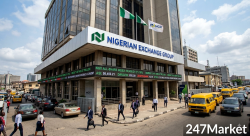
7 Red Flags to Watch for Before Investing in Nigerian Stocks
Before you buy shares on the NGX, check for these 7 red flags — from weak corporate governance to erratic dividends — that separate solid Nigerian stocks from value traps.
7 Red Flags to Watch for Before Investing in Nigerian Stocks
The Nigerian Exchange (NGX) has given patient investors some of the best returns on the continent — but it has also humbled a lot of people who bought a "hot tip" without looking under the hood.
For every Nigerian Breweries or bank stock that rewards long-term holders, there's a company whose share price collapsed quietly while retail investors waited for the "next dividend."
The difference between the two often isn't luck.
It's due diligence.
Before you commit your naira to any ticker on the NGX, or Nigerian stocks, run it through this checklist.
If a stock trips more than one of these red flags, it deserves a second look — or a pass.
1. Inconsistent or Delayed Financial Reporting
Publicly listed companies in Nigeria are required to file quarterly and annual results with the NGX and the Securities and Exchange Commission (SEC) within specific timelines. When a company routinely files late, restates prior numbers, or goes quiet for a reporting period, that's rarely a clerical issue.
What to check:
- Has the company been flagged by the NGX for late filing in the past two years?
- Do the numbers in the annual report match what was reported in interim statements?
- Is the external auditor reputable, or does the company change auditors frequently?
A company that can't report on time usually has something it's still figuring out internally — and you don't want to be the one financing that discovery.
2. Weak or Compromised Corporate Governance
Governance is the single most under-appreciated risk factor in Nigerian equities. A brilliant business model can't survive a board that rubber-stamps management decisions or a founder-CEO who treats the listed company like a personal account.
Watch for:
- Related-party transactions that aren't clearly disclosed or justified
- A board dominated by family members or insiders with no independent directors
- Frequent, unexplained changes in the CFO or company secretary
- Management that avoids analyst calls or investor questions
Strong governance doesn't guarantee performance, but weak governance almost always eventually shows up in the numbers — usually after the damage is done.
3. Deteriorating Free Float and Illiquidity
A stock can look cheap on paper and still be a trap if you can't sell it when you need to. Many Nigerian stocks listed on NGX or traded via OTC on NASD have a free float so small that a single sell order can move the price 10% in a session.
Ask yourself:
- What percentage of shares is actually available for public trading (not held by promoters, government, or insiders)?
- What's the average daily traded volume over the last three months?
- Could you exit a meaningful position within a week without crashing the price?
Illiquidity isn't just inconvenient — it hides risk.
A stock that barely trades can stay "stable" on paper for months while its fundamentals quietly rot, because there simply aren't enough transactions to reveal a fair price.
4. Rising Debt Without Rising Revenue
Debt itself isn't a red flag — Nigerian businesses operate in a high-interest-rate environment where leverage is sometimes unavoidable.
The red flag is debt that keeps climbing while revenue and operating cash flow stay flat or decline.
Key ratios to review:
- Debt-to-equity trend over 3–5 yBefore you buy shares on the NGX, check for these 7 red flags — from weak corporate governance to erratic dividends — that separate solid Nigerian stocks from value traps.ears
- Interest cover (operating profit ÷ interest expense) — anything below 2x deserves scrutiny
- Whether new borrowing is funding growth (capacity expansion, new products) or just covering operating shortfalls
With naira depreciation and CBN rate hikes squeezing companies with foreign-currency-denominated loans, this red flag has become even more important to check in the current environment.
5. Erratic or "Too Good to Be True" Dividend History
Dividends are one of the main reasons retail investors buy Nigerian stocks. But a dividend history that's inconsistent — or a yield that looks unusually high relative to the sector — deserves a closer look before you buy in for the payout.
Questions to ask:
- Is the dividend covered by actual earnings, or is the company borrowing/drawing down reserves to pay it?
- Has the payout ratio been climbing even as profit falls?
- Did the company suddenly declare a large dividend right before a rights issue or capital raise?
A company paying out more than it earns is often trying to prop up its share price or reward insiders before a hard landing.
6. Sector-Specific Regulatory or FX Exposure
Nigeria's regulatory and currency environment can turn a solid business into a struggling one almost overnight. Certain sectors — banking (CBN recapitalization rules), telecoms (tariff regulation), oil and gas (subsidy and forex policy), and insurance (new capital requirements) — are especially sensitive to policy shifts.
Before investing, understand:
- Whether the company has significant foreign-currency liabilities or import dependence
- How exposed it is to any pending regulatory deadline (e.g., recapitalization, license renewal)
- Whether the sector has a history of sudden policy reversals that hit similar companies
This isn't a reason to avoid regulated sectors altogether. Some of the NGX's strongest performers are banks and telcos.
Price in the regulatory risk rather than ignore it.
7. Hype-Driven Price Action With No Fundamental Support
If a stock's price has moved sharply in a short period with no accompanying news, earnings improvement, or corporate action, be cautious.
Nigerian retail trading communities on social media and messaging apps can drive short-term momentum in low-float stocks that has nothing to do with the underlying business.
Signs of hype-driven movement:
- Price surges without a matching increase in trading volume from institutional or informed investors
- Sudden social media chatter or "insider tip" messages pushing a specific ticker
- No corresponding update in the company's disclosures, results, or corporate actions
Chasing a stock because "everyone is buying it" is how a lot of Nigerian retail investors have ended up holding shares at the top of a spike, with no exit before the correction.
The Bottom Line
None of these red flags, on their own, should automatically disqualify a stock. Context matters, and even strong companies can show one or two of these signs temporarily.
But when a stock shows multiple red flags at once, that's a pattern, not a coincidence.
The best defense against these risks is the same one that's worked for disciplined investors everywhere: read the financial statements, understand who's running the company, check the liquidity, and don't let a hot tip replace your own due diligence.
This simply is what fundamental analysis is all about
Want data-backed insights on NGX-listed companies before you invest? Follow 247Market for regular market highlights, company analysis, and the numbers behind the headlines.