If you have ever bought property, paid school fees, or made a large purchase, someone may have asked you: "Can you pay with a banker's draft?" For many people, that question raises more questions. What exactly is a banker's draft? Why do sellers and institutions trust it more than a personal cheque? And is it really as safe as people say?
This guide answers all of that in plain language. You will learn what a banker's draft is, how it works behind the scenes, when it is the right payment method, how it compares with other options, and what to check before you accept or issue one.
What Is a Banker's Draft?
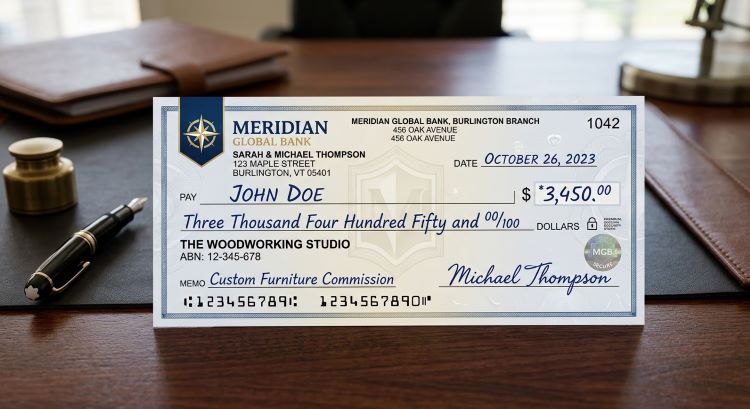
A banker's draft is a payment instrument that a bank issues to a named beneficiary on behalf of one of its customers. It carries a fixed amount (the face value), and the bank undertakes to pay that amount to the beneficiary when the draft is presented within its validity period.
The key difference from an ordinary cheque is who is liable to pay. With a personal cheque, the money sits in your account and the payment depends on you having enough funds. With a banker's draft, the bank itself is the party responsible for paying. That is why beneficiaries treat it as close to cash.
Other names for a banker's draft
The same instrument goes by several names, depending on the country and the bank:
- Bank draft
- Manager's cheque
- Cashier's cheque
- Bank cheque
These terms are often used interchangeably, but practice varies by jurisdiction. In some places they mean exactly the same thing; in others there are technical differences in how the instrument is issued or handled. If you are dealing with a large transaction, confirm the exact terminology and process with your bank.
Is a Banker's Draft a Guarantee?
Some people describe a banker's draft as a guarantee. Is that correct?
In a loose, everyday sense, yes. In a strict sense, no.
By issuing the draft, the bank has committed to honour and pay the face value whenever it is presented within the validity period. That is why people say it is "guaranteed."
But legally, a guarantee is a promise by a third party to pay if the original debtor fails to. A banker's draft works differently. It is a cheque drawn on the bank itself, and the bank takes full responsibility because it issues the draft against the customer's full funding.
In other words, before a bank issues a banker's draft, it has already:
- Debited the full amount from the customer's account (or collected the amount in cash), and
- Taken that money into its own position.
This effectively moves the liability from the customer to the bank. The beneficiary is no longer relying on the customer's account balance or promise. They are relying on the bank's own obligation to pay.
How Does a Banker's Draft Work? A Step-by-Step Look
Here is the typical life cycle of a banker's draft:
- The customer applies. The customer completes a request form at the bank, stating the amount and the name of the beneficiary (the person or organisation to be paid).
- The bank secures the funds. The bank debits the customer's account for the full amount, plus any issuing fee, or collects cash from the customer.
- The bank issues the draft. The bank prepares the draft in the beneficiary's name, signs it through its authorised officers, and hands it to the customer.
- The customer delivers the draft. The customer gives the draft to the beneficiary, ideally in exchange for the goods, service or documents being paid for.
- The beneficiary presents the draft. The beneficiary pays it into their own bank account or presents it for payment within the validity period.
- The bank honours the draft. After the usual verification, the issuing bank pays the face value, and the transaction is complete.
Because the funds were secured at step 2, the beneficiary does not have to worry about whether the customer had enough money at the time of payment.
Key Features of a Banker's Draft
- Issued and backed by a bank. The bank, not the customer, is the primary party liable to pay.
- Pre-funded. The full amount is taken from the customer before the draft is issued.
- Named beneficiary. The draft is made out to a specific payee, which makes it traceable.
- Fixed face value. The amount is set at issue and cannot be changed.
- Limited validity period. Drafts are valid for a set time. Check the date, because a stale draft may be refused.
- Traceable. Because the bank keeps a record of the customer, amount and beneficiary, the payment trail is clear.
When Is a Banker's Draft Used?
A banker's draft is the right tool whenever a transaction calls for a secure, assured and traceable payment. Because the bank has already taken the money from the customer before issuing the draft, the beneficiary faces very little risk of default. This is why the instrument is common in the following situations.
1. Property transactions
Buying land, a house or a commercial property usually involves large sums. Sellers, estate agents and lawyers prefer a banker's draft because it gives them confidence that the payment is funded, without carrying huge amounts of cash.
2. Payment for high-value goods
Cars, machinery, equipment and other expensive items are often paid for with a banker's draft. Sellers are reluctant to release valuable goods against a personal cheque that could bounce.
3. School fees
Schools and universities commonly accept, or even require, banker's drafts for tuition and other fees. This protects the institution from returned cheques and simplifies record keeping.
4. Institutional payments
Government agencies, tender processes, courts and corporate bodies often ask for banker's drafts for fees, deposits, bid securities and similar payments where a reliable, traceable instrument is needed.
5. Any transaction that needs a cheque that will be honoured
Whenever the payee wants more assurance than a personal cheque can offer, a banker's draft is a natural choice.
Banker's Draft vs Personal Cheque vs Bank Transfer
| Feature | Banker's Draft | Personal Cheque | Bank Transfer |
|---|---|---|---|
| Who is liable to pay? | The issuing bank | The account holder | The sending bank, on the customer's instruction |
| Is the money set aside first? | Yes, before issue | No, checked only at presentation | Funds are debited when the transfer is made |
| Risk of bouncing | Very low | Higher, if funds are insufficient | Not applicable, as it fails before sending |
| Speed | Depends on clearing | Depends on clearing | Often near-instant |
| Traceability | High | Moderate | High |
| Typical use | Large, sensitive payments | Everyday or trusted payments | Everyday and business payments |
A bank transfer is often quicker and cheaper, so a banker's draft is not always the best option. But some payees, especially institutions and sellers of high-value items, still insist on drafts because they are a physical, bank-issued instrument.
Advantages of a Banker's Draft
- High level of assurance for the payee. The beneficiary does not depend on the customer's account balance.
- Reduced default risk. The funds are already in the bank's hands.
- Safer than carrying cash. There is no need to move large sums physically.
- Clear audit trail. The bank's records show who paid whom, how much, and when.
- Widely accepted. Property sellers, schools and institutions readily recognise it.
Limitations and Risks You Should Know
A banker's draft is very low risk, but it is not risk-free. Anyone dealing with large sums should keep these points in mind.
- Forgery and counterfeit drafts. Fake banker's drafts are a known fraud in many countries, including Nigeria. Fraudsters rely on the belief that a draft is automatically safe.
- Banks may refuse to pay in some cases. A draft that is forged, altered or expired, or one that is subject to a court order, may not be honoured.
- Validity period. A draft that is not presented in time may become stale and need to be revalidated or reissued.
- Fees. Banks usually charge for issuing a draft, and the cost may be higher than for a transfer.
- Loss or theft. Replacing a lost or stolen draft can be slow, and the bank will typically ask for proof, an indemnity and a waiting period before reissuing or refunding it.
- Stop payment is difficult. It is much harder to stop a banker's draft than a personal cheque, because the bank has already taken on the obligation.
Are Banker's Drafts Still Relevant in the Age of Bank Transfers?
With mobile banking apps, USSD codes, internet banking and instant transfers, many people ask whether banker's drafts and cheques are on their way out. The honest answer is that their everyday use has declined sharply, but they have not disappeared.
Why the use of drafts and cheques has declined
- Instant transfers dominate everyday payments. In Nigeria, as in most countries, electronic channels such as instant transfers, mobile apps, USSD and POS terminals now handle the bulk of payments by volume.
- Transfers give the payee instant confirmation. With a transfer, the seller can see the money in their account and release the goods straight away. There is no clearing period to wait for and no paper instrument to authenticate.
- Paper is slower and costlier. Drafts and cheques must be physically issued, delivered, presented and cleared, which takes more time and effort for everyone involved.
- Forged drafts have made some payees cautious. Because counterfeit drafts are a known fraud, many sellers now prefer to confirm a credit in their account instead of trusting a piece of paper.
Where banker's drafts are still used
- Institutions with fixed procedures. Some schools, government agencies, courts and tender processes still ask for drafts because of their internal rules, documentation or audit requirements.
- Property and legal transactions. Some lawyers, sellers and estate agents still request drafts for large deals, although verified transfers are increasingly accepted.
- Very large payments and transfer limits. Individual customers often face daily limits on mobile and internet banking. When the amount is very large, a draft (or a transfer made at the counter) may be the practical option.
- Trust and habit. Some people and businesses simply feel more comfortable with a physical, bank-issued instrument.
- Security cheques. Cheques are still used as security in some loan and rent arrangements.
So, should you still use a banker's draft?
Use one when the payee specifically asks for it, when an institution's rules require it, or when a transfer is not practical for the amount involved. Otherwise, a verified bank transfer is often faster, cheaper, and just as safe, and for the payee it can be safer, since the money is visible in their account.
In short, the banker's draft has moved from being the default choice for large payments to a specialised option for particular situations.
How to Verify a Banker's Draft Before You Accept It
If you are the payee, especially for a large amount, never assume that a draft is genuine just because it looks official. A few simple checks can protect you:
- Contact the issuing bank directly. Use a phone number or branch address you have found independently, not one printed on the draft or supplied by the person paying you.
- Confirm the details. Check the amount, beneficiary name, date and draft number with the bank.
- Inspect the draft. Look for signs of tampering, mismatched fonts, smudging or missing security features.
- Wait for clearing. Do not release goods, documents or keys until the draft has been confirmed and the funds have actually cleared into your account.
- Be careful with overpayments. If someone sends a draft for more than the agreed amount and asks you to refund the difference, treat it as a red flag.
How to Get a Banker's Draft
The exact process varies by bank, but you will usually need to:
- Visit your bank, or use its request channel if it offers one.
- Complete a banker's draft request form with the beneficiary's exact name and the amount.
- Provide identification and have enough funds in your account to cover the amount and the fee.
- Pay the issuing charge.
- Collect the draft and check that every detail is correct before you leave the branch.
Tip: Always write the beneficiary's name exactly as it appears on their account or official documents, since a spelling error can delay or block payment.
What If a Banker's Draft Is Lost or Stolen?
Report it to the issuing bank immediately. In most cases, the bank will ask you to submit a written request, sign an indemnity, and wait for a set period before it reissues the draft or refunds the amount. This protects the bank from paying twice. Keep a copy of the draft, or at least its number, whenever possible.
Frequently Asked Questions
What is a banker's draft in simple terms?
It is a payment instrument issued by a bank to a named beneficiary, on behalf of a customer, that promises payment of a fixed amount when the draft is presented. The bank has already taken the money from the customer, so the beneficiary can rely on the bank rather than the customer.
Is a banker's draft the same as a manager's cheque or cashier's cheque?
They are very close and often used as alternative names for the same thing. The exact meaning can differ from one country or bank to another, so it is worth confirming with your bank.
Is a banker's draft the same as a bank guarantee?
No. A bank guarantee is a promise to pay if a third party defaults. A banker's draft is a direct payment instrument drawn on the bank and issued against the customer's full funding.
Can a banker's draft bounce?
It is very unlikely to bounce for lack of funds, because the bank has already deducted the money. However, a bank can decline to pay a draft that is forged, altered or expired, or that is caught by a court order.
How long is a banker's draft valid?
It depends on the bank and the jurisdiction. Always check the date on the draft and present it in good time.
Can a banker's draft be cancelled?
It can be cancelled or refunded in some circumstances, such as when the draft is unused, lost or stolen, but the process is stricter than for a personal cheque. Expect to deal directly with the issuing bank.
Are banker's drafts still commonly used today?
Far less than before. Instant transfers and mobile banking now handle most everyday payments. Banker's drafts remain in use where an institution requires them, for some property and legal transactions, and where a transfer is not practical for the amount involved.
Is a banker's draft safer than a bank transfer?
Not necessarily. Both are secure when handled properly. A draft gives a payee a physical, bank-backed instrument, while a transfer is faster and easier to track electronically. Forged drafts are a real risk, so verification matters either way.
Final Thoughts
A banker's draft earns its reputation as a trusted payment method because the bank takes on the obligation to pay after taking the money from the customer first. That is why it is so widely used for property deals, high-value purchases, school fees and institutional payments.
Trust should still be paired with care. Verify large drafts with the issuing bank, watch out for forgeries, and never release goods or documents before the funds are confirmed. Used wisely, a banker's draft remains one of the most dependable ways to make and receive large payments.
Have a question about banker's drafts or other payment methods? Leave a comment below or explore more guides on 247market.info.