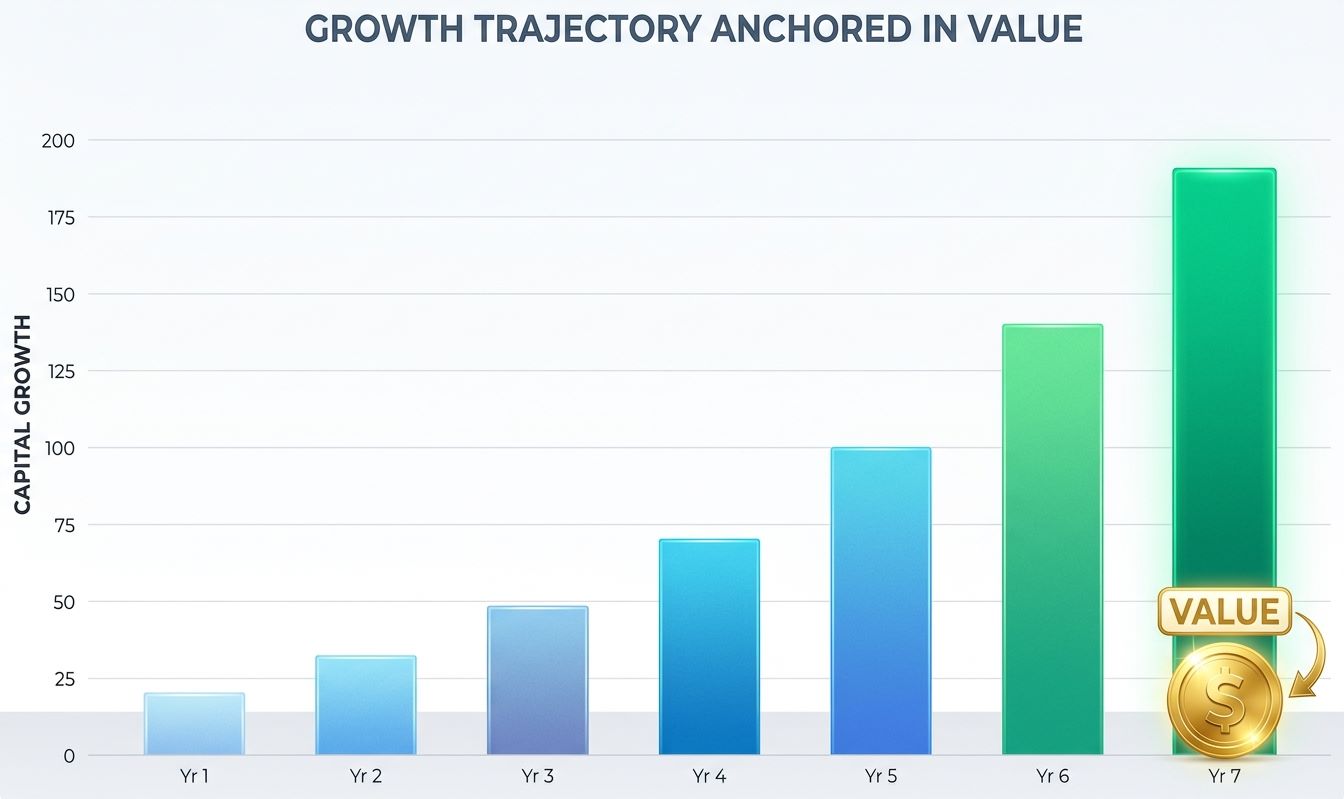
One of the ways successful investors grow money in the capital market is through Value Investing.
Heard of Warren Buffett?
Yes, he consistently features in Forbes list of the world's richest men. What differentiates Buffett from other members of the world billionaire club is that he created his wealth, primarily from investing in the stock market
He is also very popular within the investment circle for his strict adherence to the Value Investing Strategy.
This strategy is quietly behind the portfolios of many of Nigeria's most successful long-term investors too.
Think of the people who bought into companies like Dangote Cement, Zenith Bank, or MTN Nigeria years before everyone else noticed, and held on.
In this guide you will learn what value investing actually means, why it works particularly well in a market like the Nigerian Exchange (NGX), and how you, as a complete beginner or someone who's dabbled but wants a real strategy, can start applying it today.
What Is Value Investing?
Value investing is an investment strategy of buying into assets that are priced below their market value and holding onto the investment until the value appreciates to its true worth.
In other words, you buy shares in companies that the market has priced below their true worth, hold them until the price catches up to that real value — or beyond before you exit.
Every company has two "prices" in investing:
- Market price — what the stock is currently trading for on the NGX, for example, and
- Intrinsic value — what the company is actually worth, based on its earnings, assets, cash flow, and growth prospects.
A value investor's entire job is spotting the gap between these two numbers. When market price is well below intrinsic value, you've found a potential value stock.
Value investing is grounded in fundamental analysis of companies and the ability to identify intrinsic values of assets and predict future market price potential
This value investing strategy was pioneered by Benjamin Graham (Warren Buffett's mentor) in the 1930s and has since become one of the most consistently successful investing philosophies in the world.
Its popularity is not because it's flashy, but because it's disciplined, patient, and rooted in facts rather than hype.
Why Value Investing Matters for Nigerian Investors Specifically
Nigeria's capital market has some unique characteristics that make value investing especially relevant here:
- Market inefficiency works in your favour. The NGX has fewer institutional analysts covering it compared to markets like the NYSE or LSE, which means mispricing happens more often — and stays uncorrected longer. That's exactly the kind of gap value investors look for.
- Currency and macro volatility punish speculation. With naira depreciation, inflation, and interest rate swings, chasing hot stocks or "hot tips" on WhatsApp and Twitter is a fast way to lose money. Value investing's focus on fundamentals gives you a more stable anchor.
- Many solid companies are overlooked. Sectors like banking, industrial goods, and consumer goods on the NGX often contain fundamentally strong companies trading at low price-to-earnings (P/E) ratios simply because retail sentiment is elsewhere — usually chasing forex or crypto speculation instead.
- Dividend culture is strong. Nigerian blue-chip companies, including the banks have a long history of paying consistent dividends, which rewards patient, long-term holders — the exact behaviour value investing encourages.
Core Principles of Value Investing
1. Buy Below Intrinsic Value
This is the single most important concept in value investing.
You never want to buy a stock at exactly what you think it's worth. You want a cushion, a margin of safety, in case your analysis is wrong or the market takes longer than expected to correct.
If you calculate a stock's intrinsic value at ₦25 per share and it's trading at ₦15, that ₦10 gap is your margin of safety.
2. Focus on Fundamentals, Not Price Charts
Value investors care about:
- Earnings per share (EPS) — how much profit the company makes per share
- Price-to-earnings ratio (P/E) — how expensive the stock is relative to its earnings
- Price-to-book ratio (P/B) — how the stock price compares to the company's net asset value
- Debt levels — how much the company owes relative to its equity
- Free cash flow — the actual cash the business generates after expenses
- Dividend history and payout consistency
You're studying the business, not the stock's short-term movement.
3. Think Like a Business Owner, Not a Trader
Benjamin Graham famously said the stock market is a "voting machine" in the short run but a "weighing machine" in the long run. Value investors buy a piece of a real business — with real revenue, real customers, and real assets — and expect the market to eventually recognise that value, even if it takes years.
4. Be Patient
In value investing strategy, patience is key. Therefore, this strategy is not for people looking to double their money in a month. It typically plays out over 3–10+ years. If you need quick returns, this isn't the strategy.
But if you're building long-term wealth, it's one of the most tested approaches in financial history.
5. Avoid the Herd
Value investors are often buying when everyone else is selling, and selling (or holding steady) when everyone else is euphoric.
This contrarian discipline is uncomfortable but is where much of the outperformance comes from.
How to Start Value Investing on the NGX: A Step-by-Step Guide
Step 1: Open a Brokerage or CSCS Account
You'll need a stockbroking account with a licensed dealing member of the NGX, linked to a Central Securities Clearing System (CSCS) account, which holds your shares electronically. Most Nigerian brokers now offer digital onboarding.
Step 2: Learn to Read Financial Statements
You don't need to be an accountant, but you should be comfortable reading a company's:
- Annual report and audited financial statements
- Quarterly (Q1–Q4) results filed with the NGX and SEC
- Investor presentations
These are publicly available on the NGX website and on company investor relations pages, or investment information portals like 247market.info.
Step 3: Screen for Undervalued Stocks
Look for companies with:
- A low P/E ratio compared to their sector average
- Consistent or growing earnings over the past 3–5 years
- Manageable debt levels
- A history of paying dividends
- A business model you actually understand
Step 4: Calculate (Even Roughly) Intrinsic Value
You don't need a PhD-level model. Even a simple comparison of a company's P/E ratio against its historical average and sector peers, combined with checking whether earnings are growing, gives you a reasonable read on whether a stock is cheap or expensive.
Step 5: Buy With a Margin of Safety — and Be Patient
Once you've identified a stock trading meaningfully below what you believe it's worth, buy in stages rather than all at once, and be prepared to hold for years, not weeks.
Step 6: Review, Don't React
Check your holdings periodically (quarterly is enough) to confirm the fundamentals still hold. Ignore daily price noise — that's trading behaviour, not investing behaviour.
Common Mistakes Nigerian Beginner Investors Make
- Confusing "cheap" with "undervalued." A stock at ₦2 isn't automatically a bargain — you need to look at the fundamentals, not just the share price.
- Ignoring liquidity risk. Some NGX stocks are cheap because almost nobody trades them, which can make it hard to sell when you want to.
- Following social media "gurus" instead of doing independent research.
- Panic-selling during naira devaluation news or market dips instead of assessing whether the underlying business is actually affected.
- Not diversifying across sectors (banking, consumer goods, industrials, telecoms) to manage sector-specific risk.
Value Investing vs. Other Strategies: A Quick Comparison
| Strategy | Time Horizon | Focus | Risk Level | Best For |
|---|---|---|---|---|
| Value Investing | Long-term (3–10+ yrs) | Undervalued fundamentals | Moderate | Patient, wealth-building investors |
| Growth Investing | Medium–long term | High revenue/earnings growth | Higher | Investors comfortable with volatility |
| Day Trading | Days/hours | Price movement | Very High | Active traders, not beginners |
| Dividend Investing | Long-term | Steady income | Low–Moderate | Income-focused investors |
Many successful Nigerian investors actually blend value investing with a dividend focus — buying undervalued, fundamentally sound companies that also pay reliable dividends, which provides income while you wait for capital appreciation.
Frequently Asked Questions
Is value investing good for beginners in Nigeria? Yes. It's arguably one of the safer entry points into the NGX because it forces you to study a company's fundamentals before buying, rather than reacting to hype or price momentum.
How much money do I need to start value investing in Nigeria? You can start with as little as ₦10,000–₦50,000 through most Nigerian brokers, since NGX shares can be bought in relatively small lot sizes. What matters more than the amount is consistency and the quality of your stock selection.
Which sectors on the NGX are good for value investing? Banking, industrial goods, and consumer goods have historically offered value opportunities on the NGX due to their established earnings history and dividend track records, though every stock still needs individual analysis.
How is value investing different from just buying blue-chip stocks? Blue-chip companies can still be overpriced. Value investing isn't about buying "big name" companies — it's about buying any company, big or small, when its market price is below its calculated true worth.
Also very important to note is that value investing is not the same as buying penny stocks. That a stock is cheaply priced doesn't mean it is a value stock. Most penny stocks don't offer a profitable investment experience.
A value stock, on the other hand, is one with strong fundamentals and has the capacity to trade at a price beyond what it is currently trading at, but somehow, the market is yet to discover its potential.
Discovering this potential before other investors do is at the heart of value investing.
Final Thoughts
Value investing isn't exciting in the way crypto or forex trading can feel exciting. It's a strategy built on patience, research, and discipline, which is exactly what tends to survive Nigeria's macroeconomic volatility over the long run.
Start small, learn to read financial statements, resist the urge to chase trends, and let time and compounding do the heavy lifting.
This article is for educational purposes and does not constitute financial or investment advice. Always conduct your own research or consult a licensed financial advisor before making investment decisions.